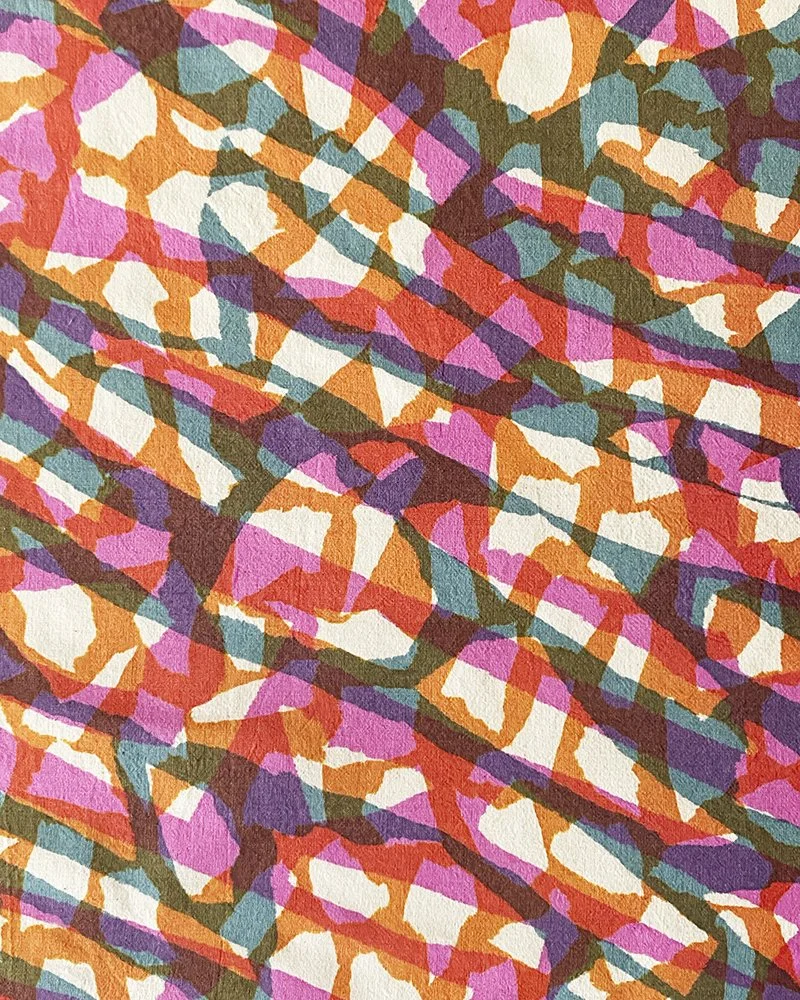
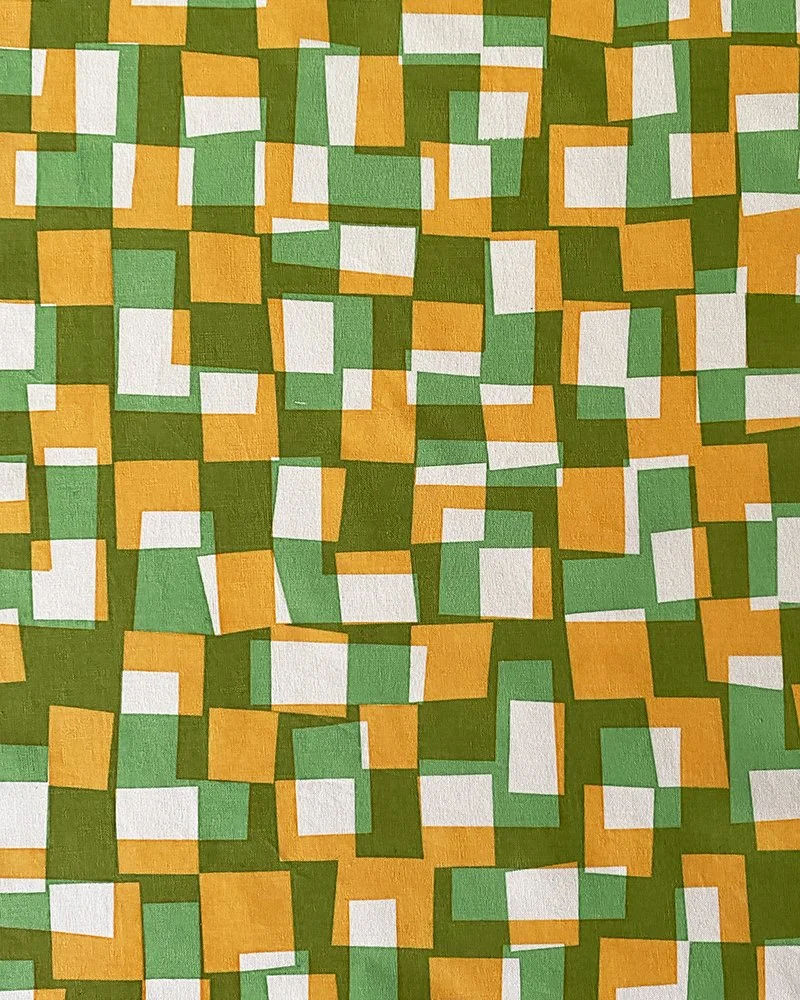
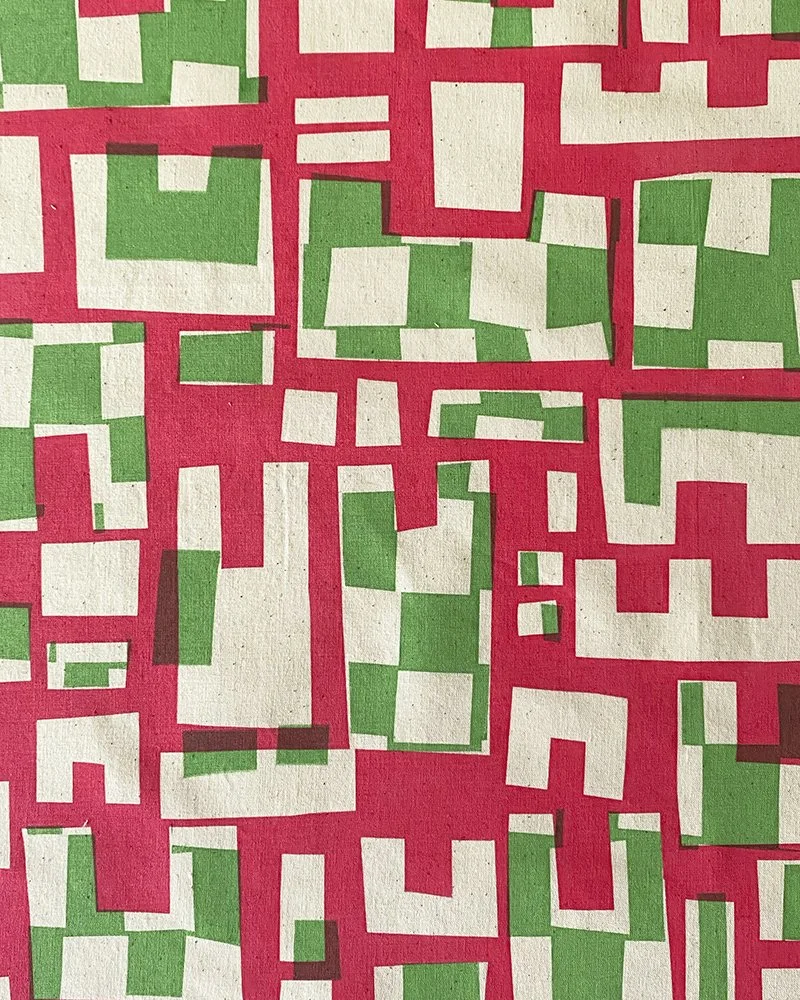
I have been playing around with modular-system printmaking for a long time. I would cut multiple linoleum blocks and print them on top of one another in different colors and combinations. I love the process, but I am never quite sure what to do with the resulting prints. They always feel too experimental, or too unfinished, to call them finished works.
With screen-printed textiles, however, I’ve realized that I don’t have the same kind of uncertainty or self-imposed restrictions. Printed paper and cloth can both be artworks in their own right, as well as raw materials to be transformed into other forms. What draws me to textiles is their potential to move between two and three dimensions. A piece of printed cloth can function as an image, but it can also be folded, cut, sewn, gathered, or draped into something else. I find myself imagining these possibilities even as I am printing. The pattern is therefore never quite an endpoint; its incompleteness marks the beginning of a new exploration.
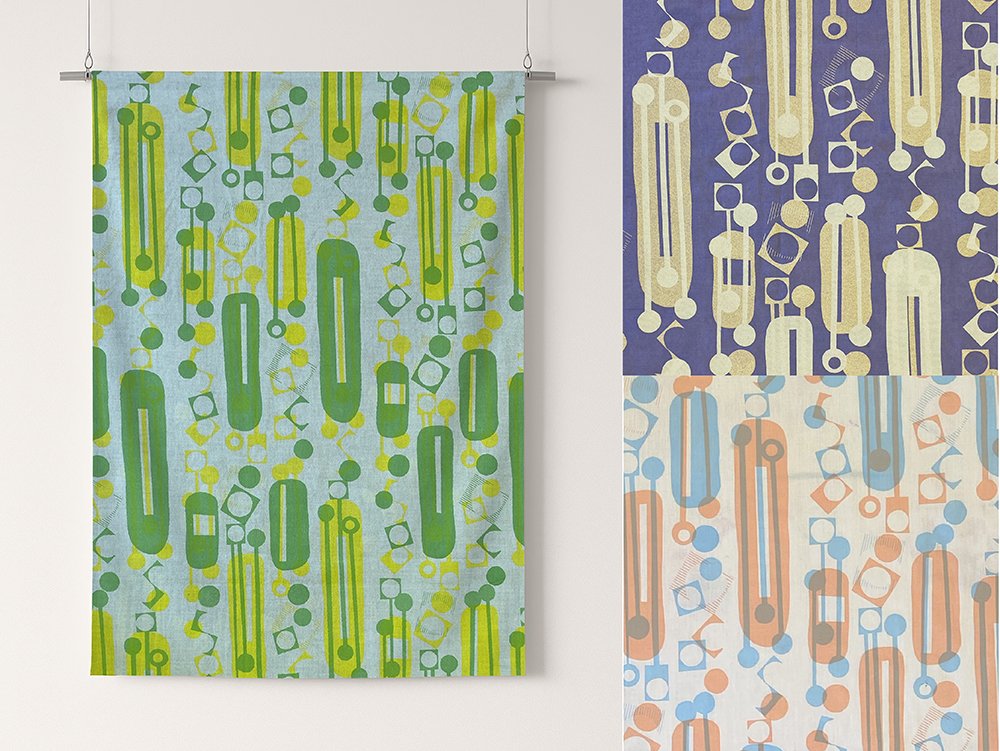
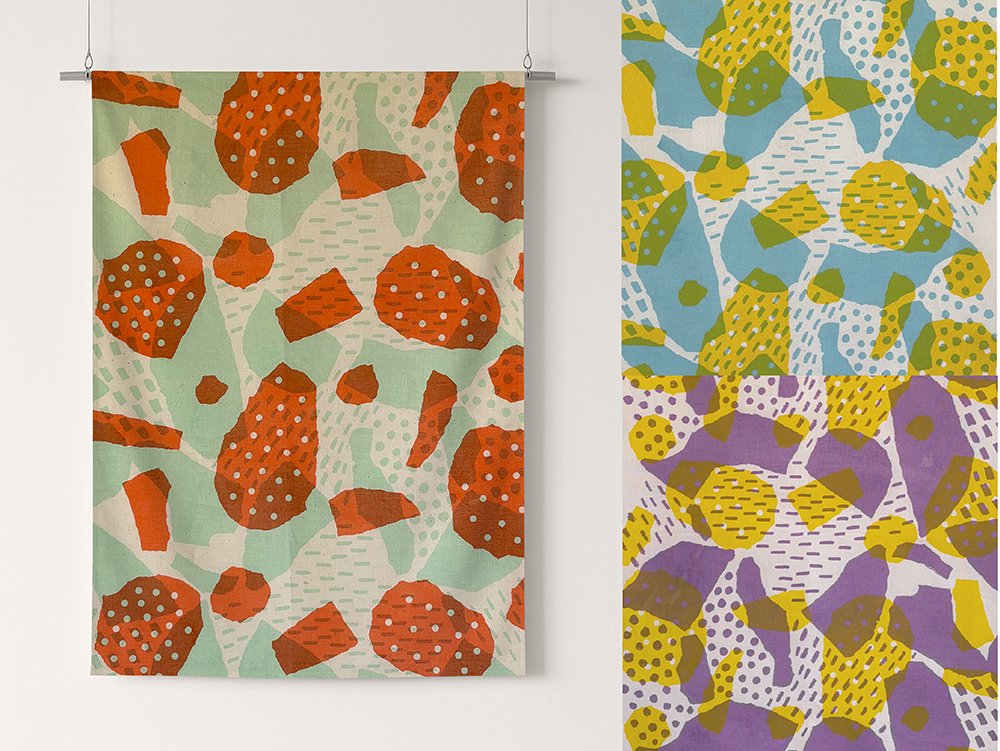
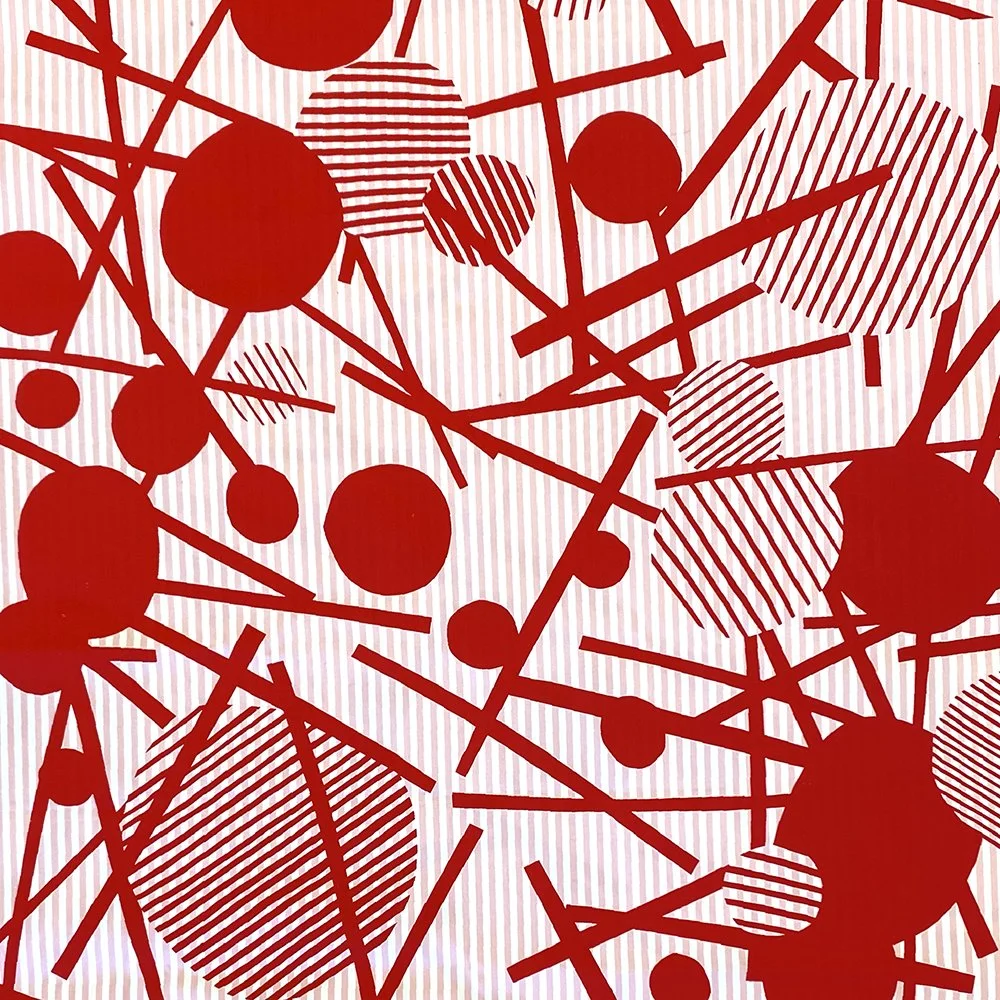
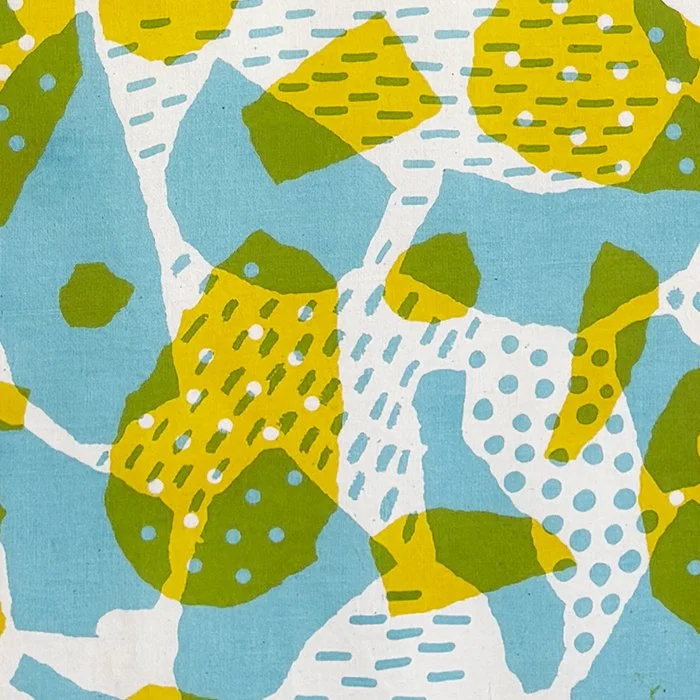
The prints here are part of an ongoing series of experiments in which I begin with a blank screen and fabrics. I use paper to create shapes and block out areas, then print with dye. Each subsequent layer is made in response to what came before. Precision is not the goal. Instead, the transparency of the dye allows the accumulation of layers to remain visible, resulting in images that are unpredictable, playful, and always open to further transformation.
Screenprint on cotton.
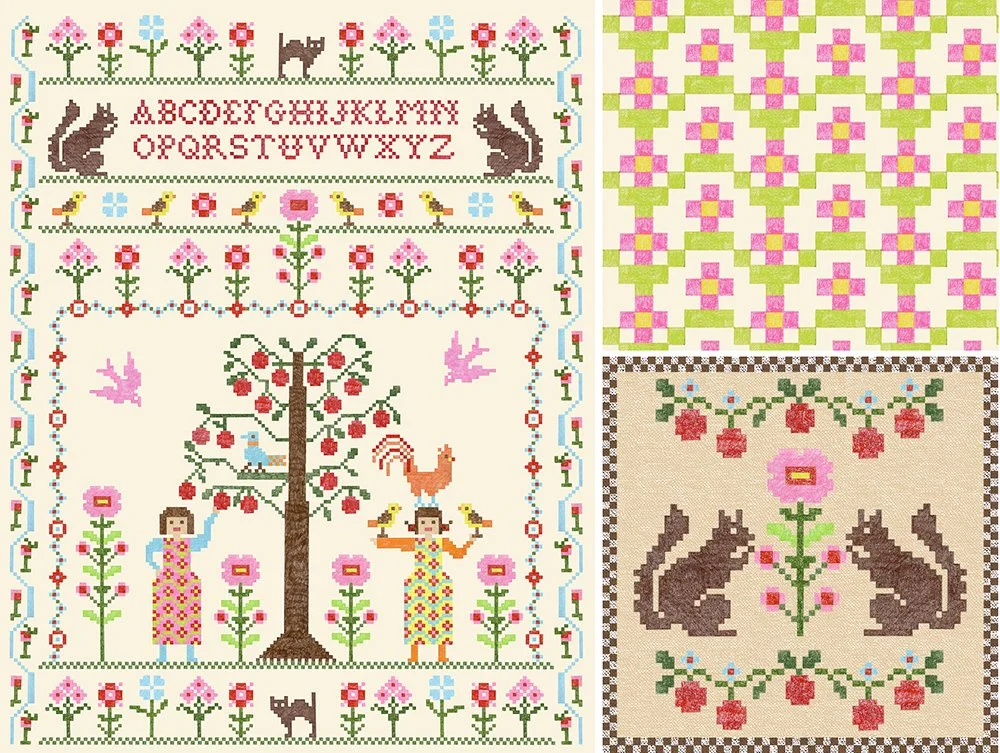
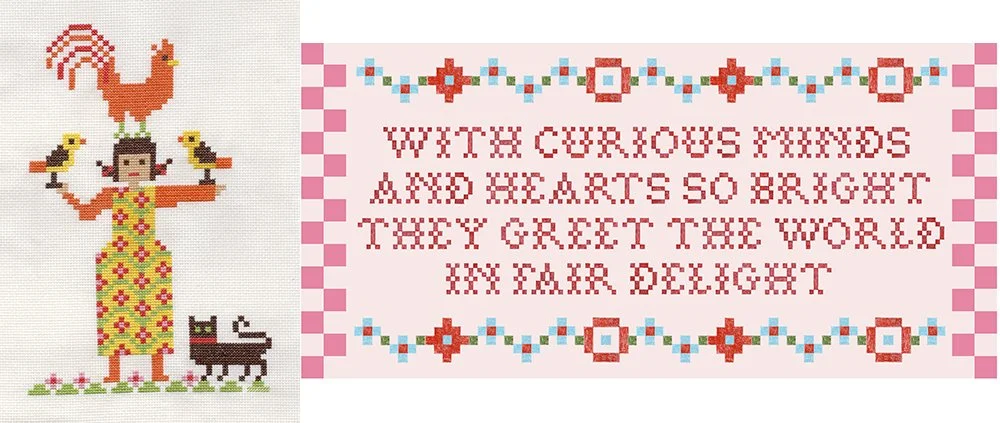
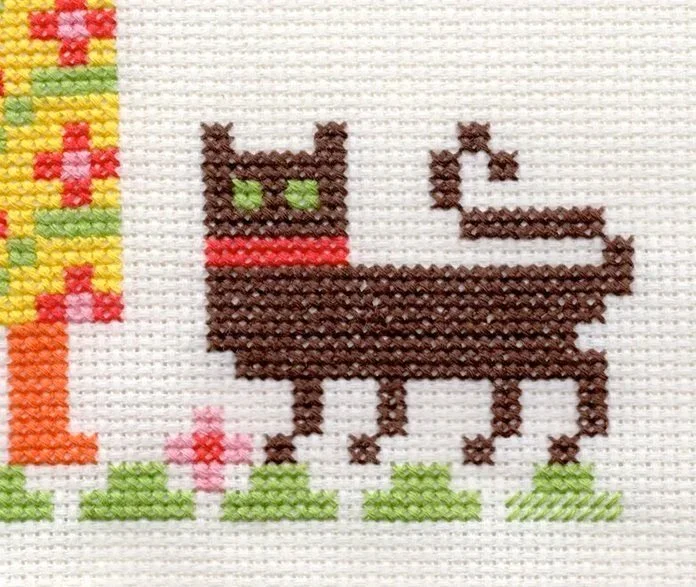
Originally designed as a children's bedding collection, Tiny Trails and Wildflowers reimagines the visual language of traditional cross-stitch. Historically, cross-stitch samplers taught young girls to read, write, and sew—skills considered essential to their future roles as wives and mothers. While recognizing the complexity of its history, I wanted to reinterpret the tradition as a celebration of the ingenuity and creativity of generations of women who came before us.
I am currently translating the designs into cross-stitch patterns, allowing the project to return to the medium that first inspired it.
Color pencil drawings.
In the winter of 2025, I saw an exhibition of the Japanese textile and fashion brand Minä Perhonen in Tokyo. The exhibition showed the entire design process—from sketches and original artworks to collaborations with artisans and the textiles that emerged from them. I was particularly inspired by the way original drawings and paintings were translated into embroidered, woven, and printed textiles. Rather than reproducing an image exactly, each process introduced opportunities for interpretation, allowing the work to evolve in a playful and often unexpected way.
When I started working on this collection, the excitement I felt at the exhibition still lingered strongly in me. Visual simplicity, traces of the human hand, and material play are qualities I hoped to carry into my own work. They continue to shape the direction I want to explore in future projects.
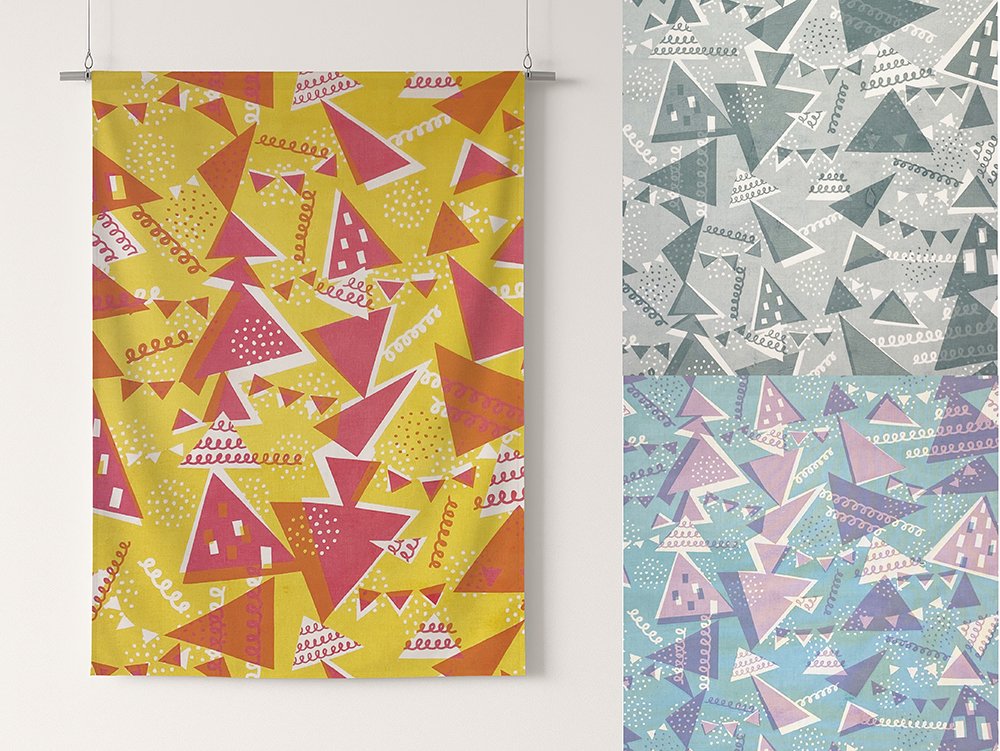
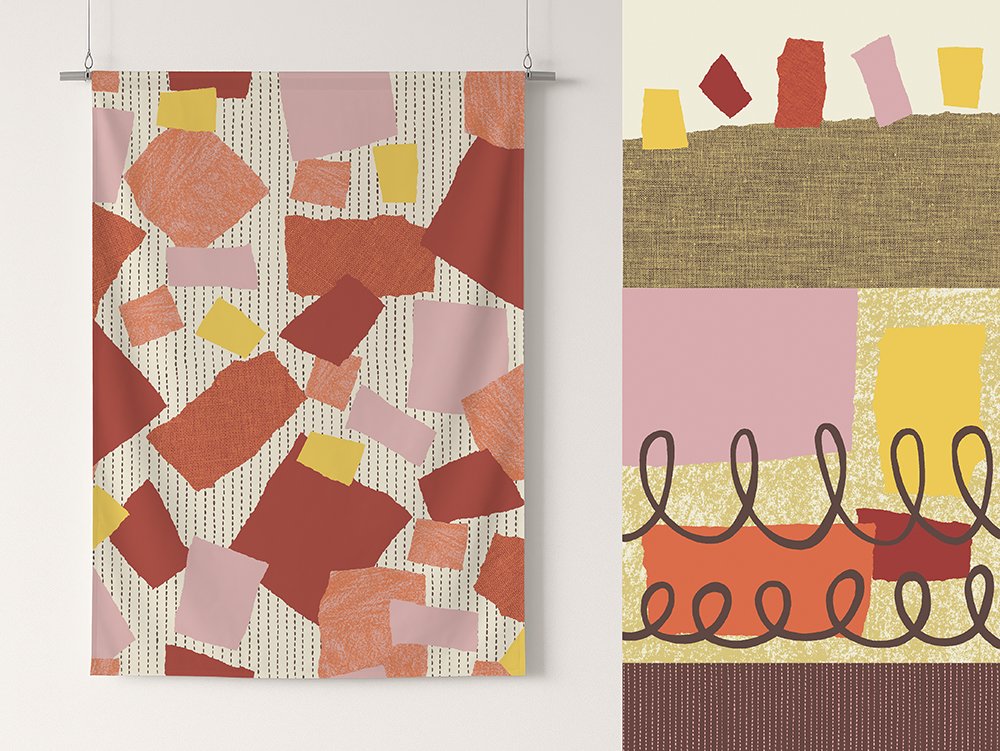
The collection includes three patterns based on basic geometric shapes (circles, triangles, and rectangles). Each design was printed in three different colorways.
Screenprinted on cotton. 2026.
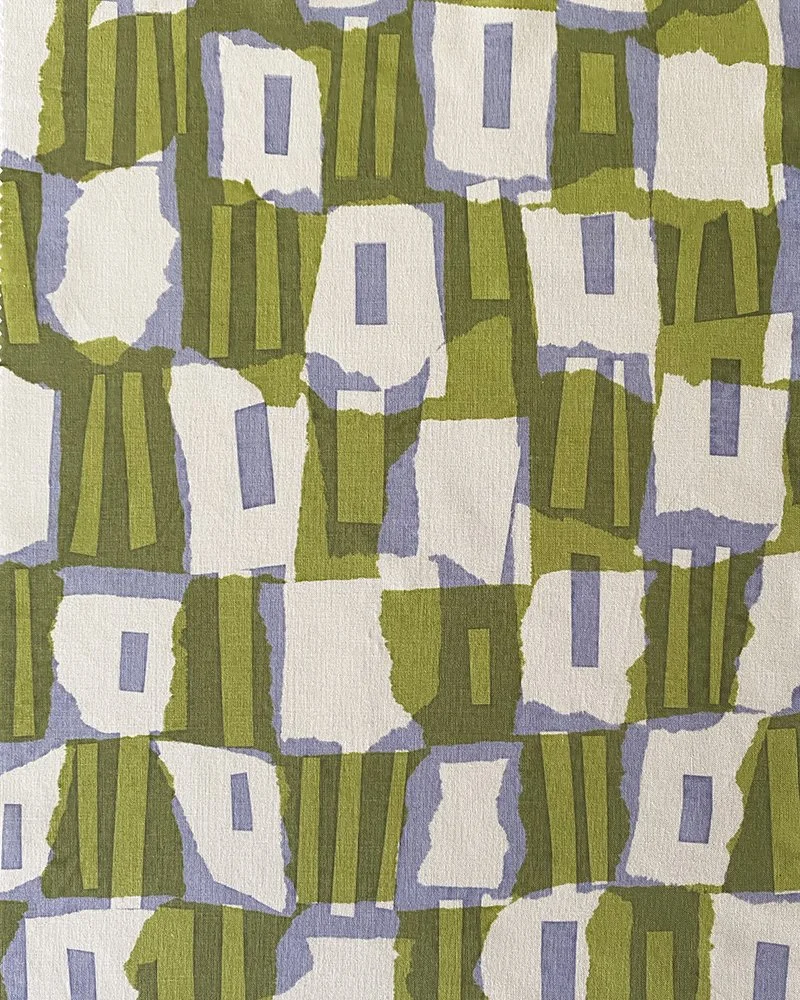
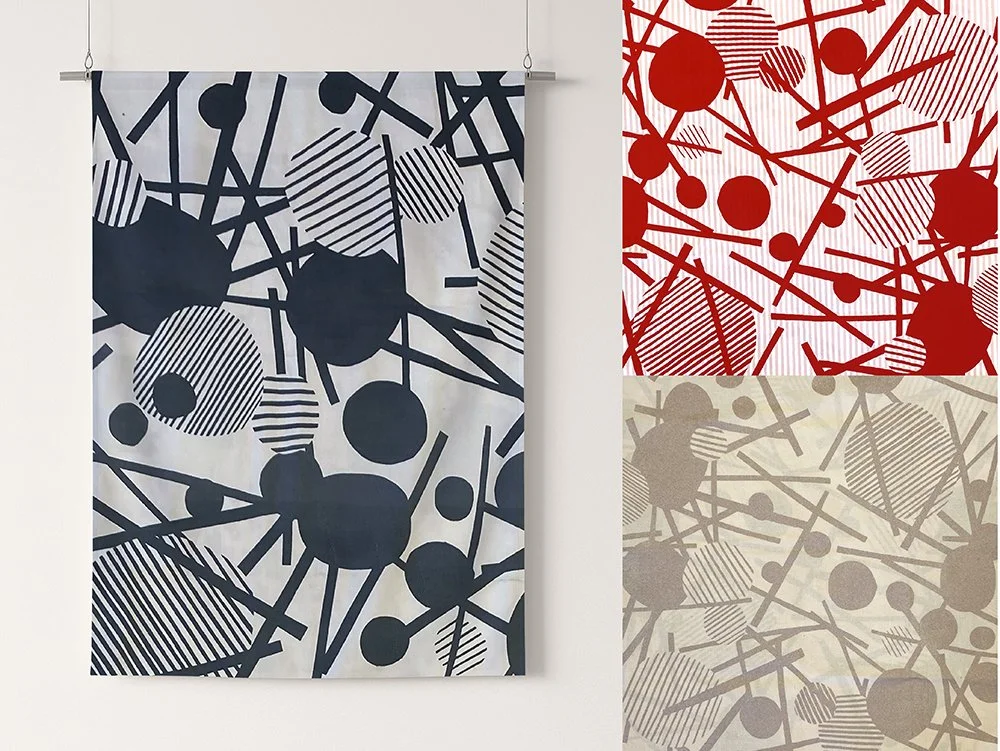
Paper Play began with an assignment I never taught.
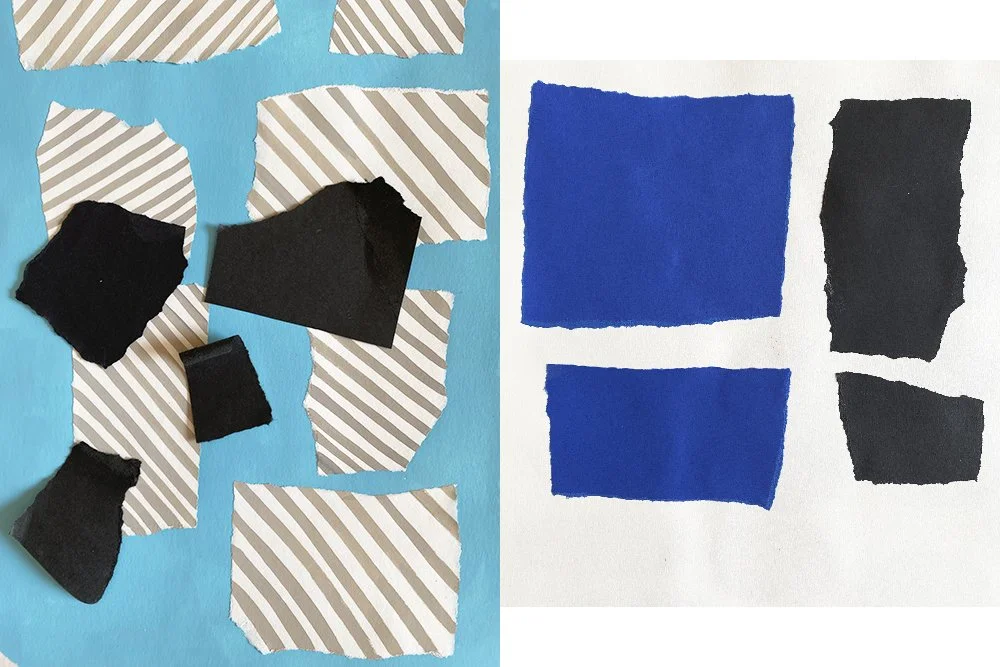
While teaching a foundational design course at a local university, I looked for ways to encourage students to move beyond making recognizable images and discover composition through experimental processes. Drawing inspiration from some of the image-making methods used by Dada artists, I developed an exercise using torn paper that allowed unexpected forms, rather than deliberate drawing, to shape the final composition. Although I ultimately decided the assignment wasn't right for my students, the question stayed with me, eventually finding its way into my own studio practice.
The project developed into two related series: hand screen-printed cotton fabrics produced in three colorways, and a digitally designed bedding collection built from scanned torn-paper forms. In both, simple paper fragments become the building blocks of repeating patterns.
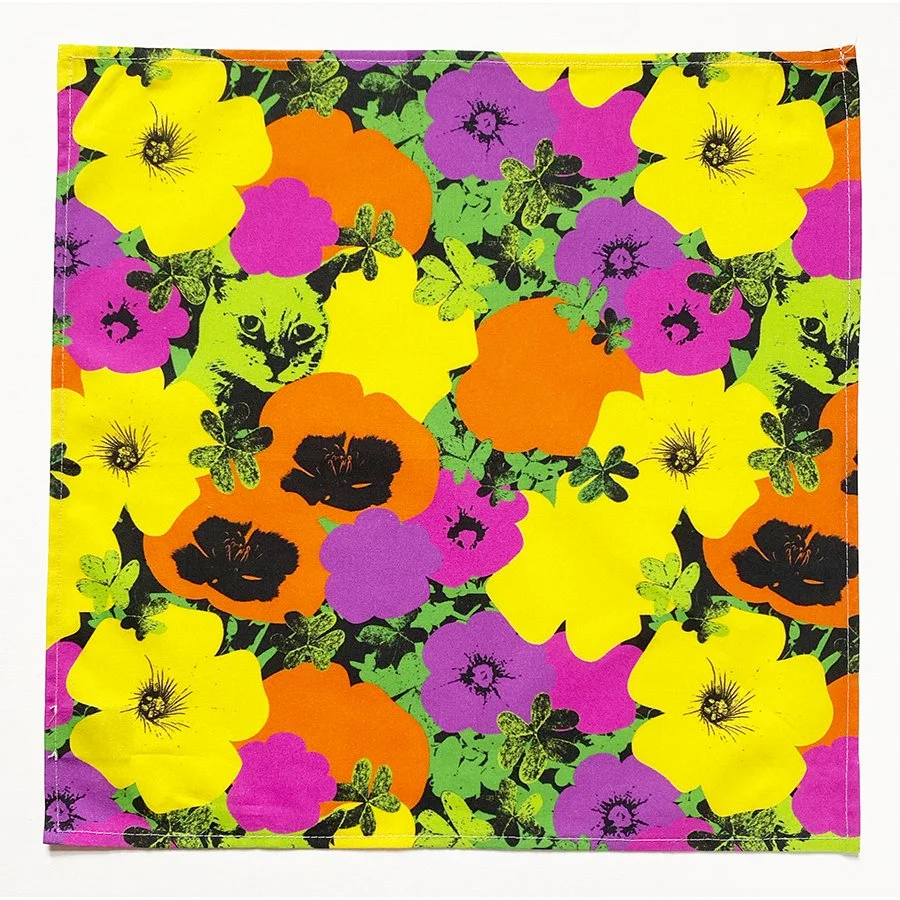
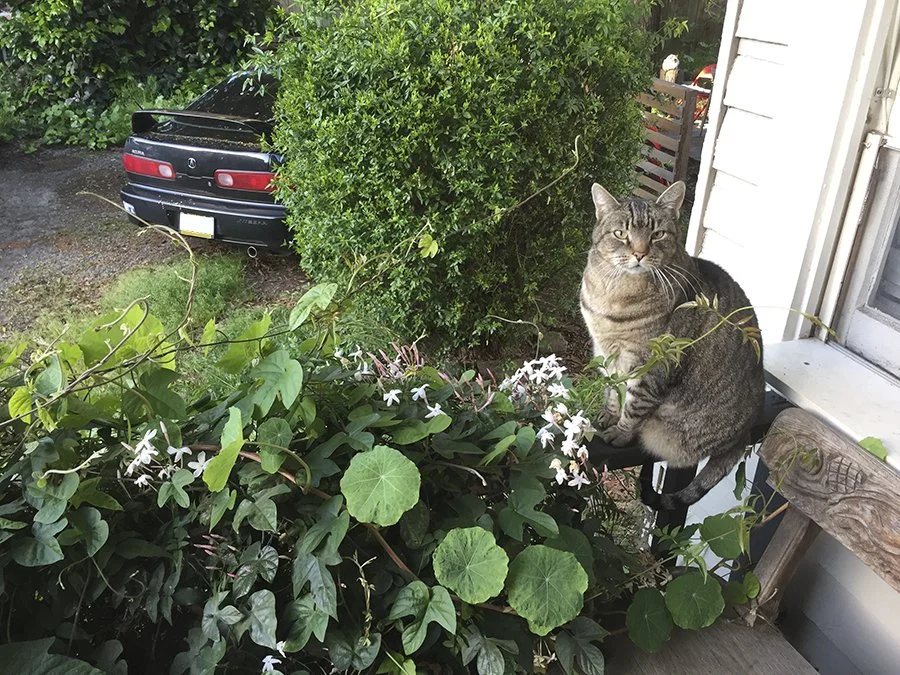
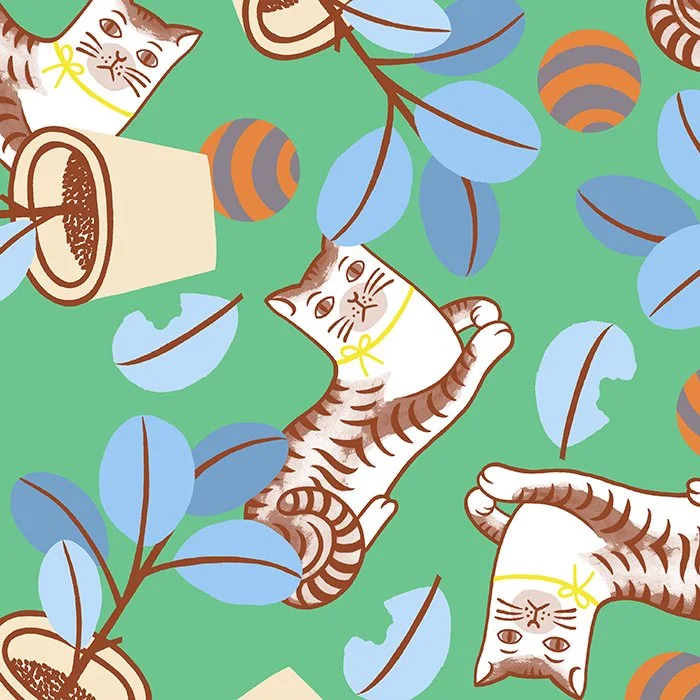
When I lived in Oakland, California, I had a huge backyard that came with a bunch of cats. It was overgrown with wild plants, and even after I cleared it and hauled in a truckload of mulch and soil, weeds and wild flowers kept returning. Trying to tame the yard proved to be a futile effort. Eventually, I stopped fighting it, let the plants grow, and learned to live alongside them. It's been a while since I left Oakland, but I still remember that yard with great fondness. This textile was inspired by the many hours I spent in the garden with the cats.
Digital print on cotton. 12.5 X 12.5 in. Open edition. 2025.
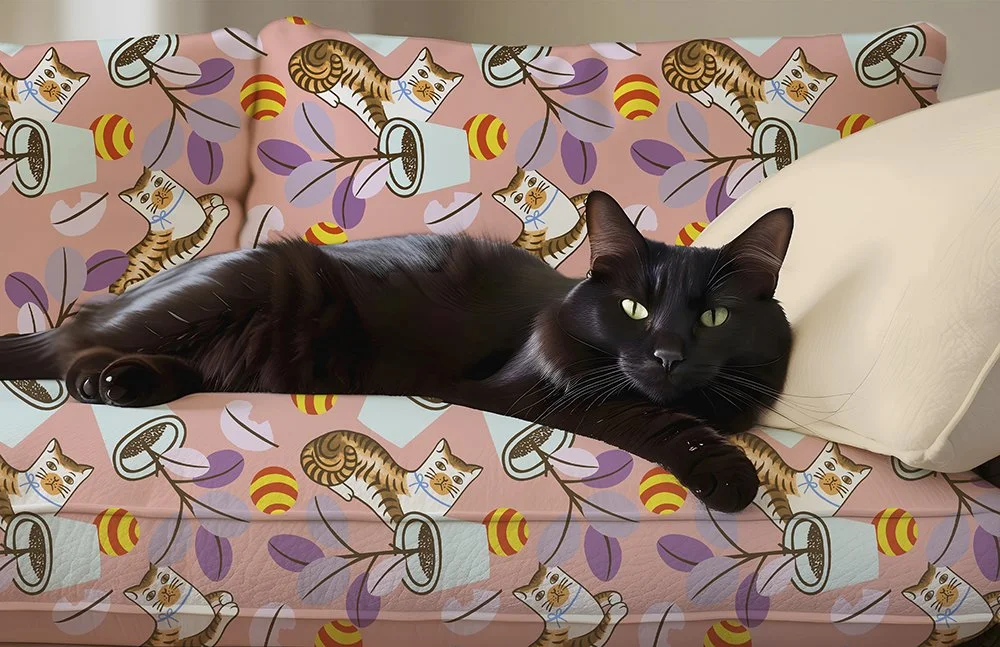
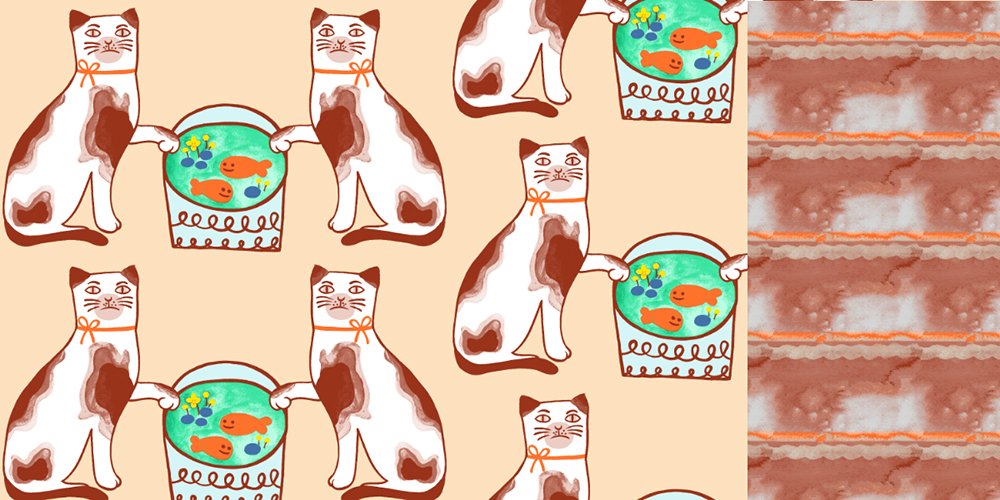
Cat Named Memphis began with a daydream about living inside one of the interior drawings by my favorite artist, Nathalie du Pasquier, whose work was instrumental in defining the Memphis design movement. What could I possibly add to an already maximalist, already perfect room? Cats, of course.
The project includes two cat-themed patterns and one coordinating texture pattern designed for home fabrics. Original gouache paintings were scanned and digitally arranged into repeating textile patterns.
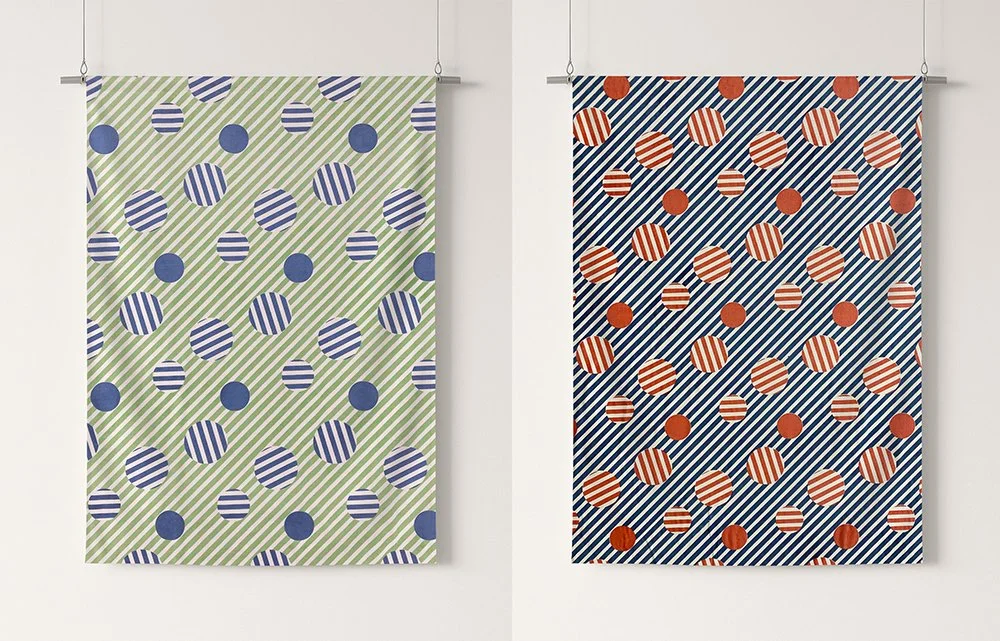
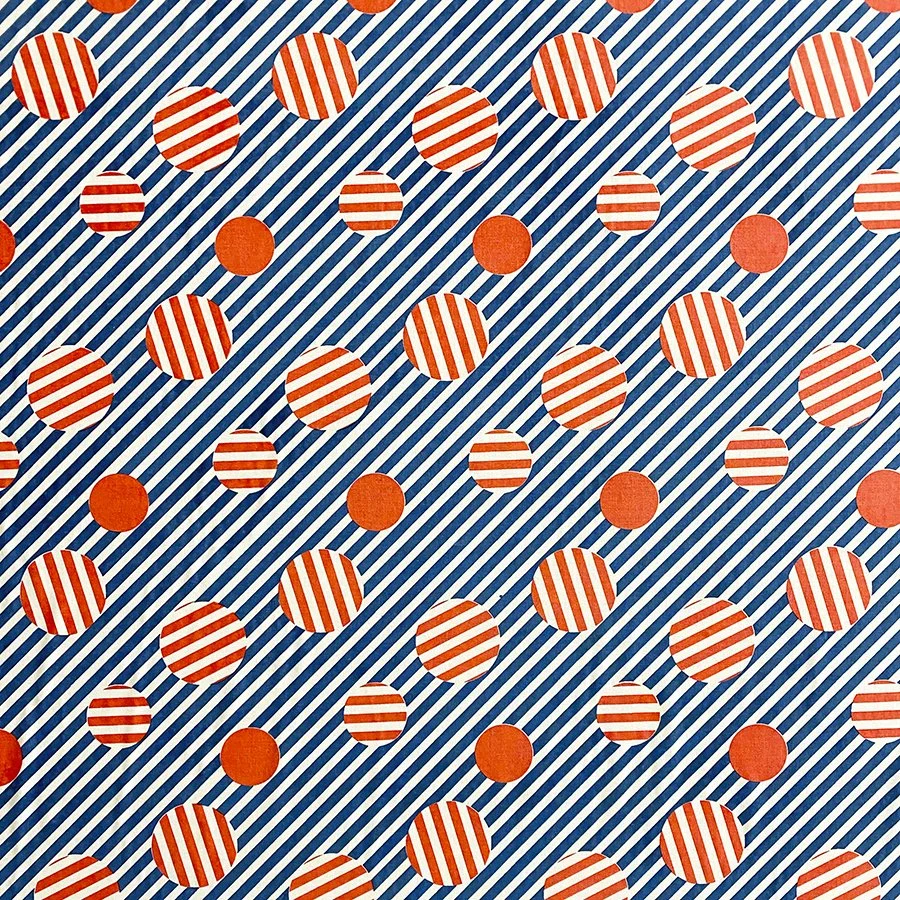
Stripes & Dots, a companion to the book of the same title, extends my exploration of fundamental patterns into textiles. How do you translate these ubiquitous patterns into something new, fresh, and exciting? How do you make a statement pattern out of such humble motifs? I certainly had fun trying.
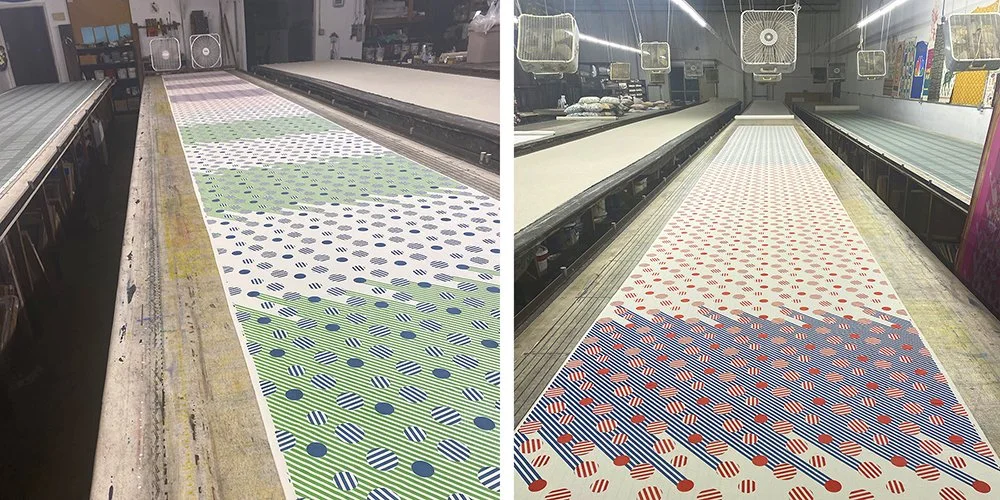
Screenprinted on cotton by Ryan Harrison of Shaky Hands Press, with assistance from Yoni Asega in San Francisco, CA.